
Is Hindustan Unilever (HUL) losing its crown - and do modern Indians even care about legacy giants like Horlicks and Lux anymore?
It’s a wake-up call that some deep structural forces are eroding HUL’s dominance.
3 min read
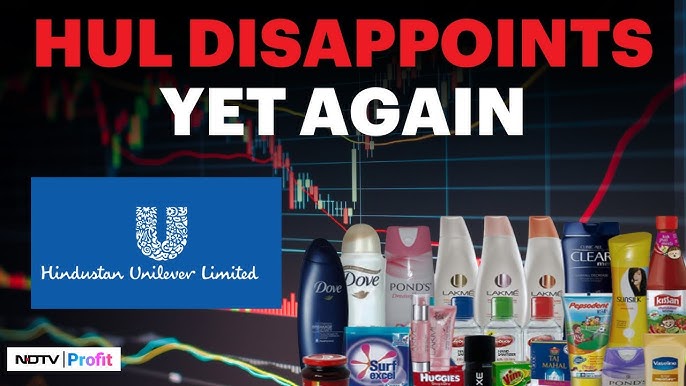
HUL’s rotten shareholder returns despite booming Sensex
For the past 5 years, while the Indian markets — led by the BSE Sensex — almost doubled, HUL delivered only about ~10 % return. That’s barely a fraction of the broader market’s rally. The Economic Times+1
This isn’t a blip — over a longer horizon, HUL’s compounded annual growth rate (CAGR) has lagged peers, dragging its “buy-and-hold forever” appeal into question. The Indian Express+1
Slowing volume growth, margin pressures & a shifting business reality
The fundamentals are shaky: recent quarterly results saw modest profit growth (about 3–4 %) — in fact, after a Q2 result earlier this year, brokers turned cautious citing margin pressures. The Economic Times+1
For decades, HUL’s strength lay in commanding market share across mass-consumer segments — but rising inflation, shifts in consumer behaviour, and cost challenges are squeezing margins, making “safe-play” returns increasingly uncertain. The Core+2The Indian Express+2
The “defensive, recession-proof” myth is crumbling
Many investors pegged HUL as a defensive, recession-proof stock — a cushion against volatility. But with its return profile now stagnating, that narrative needs re-evaluation.
With multiple small and mid-cap stocks bleeding 30-50% even as Sensex stays high, HUL’s relative underperformance underscores a bigger truth: diversification matters more than legacy brand comfort. The Economic Times+2The Economic Times+2
What this means for existing shareholders — and new investors
Holding HUL for decades hoping it replicates past compounding? The odds look slim — growth seems capped.
For investors chasing higher returns: this might be the time to re-evaluate allocation toward sectors with better growth visibility (e.g. tech, cyclical, or newer consumer-facing firms).
For long-term investors still keen on consumer-staples exposure: HUL may still offer stability — but expect slow, compound-like returns, not spectacular gains.
Bottom line: HUL is no longer the “set-and-forget forever compounding machine.” It’s become a lumbering giant — stable, but slow. And in markets that reward agility, stability can be a drawback.
The paradigm shift in Indian consumer behaviour
For decades, buying from established brands like Horlicks or Lux (both under HUL) was automatic for millions of Indian households. But times are changing.
Today’s consumer — especially in urban India — values trend, transparency, personal fit, and digital-first experience. Many millennials and Gen-Z buyers don’t hesitate to try newer, bold, niche or D2C brands instead of automatically trusting legacy names. This shift is eating into HUL’s once unassailable dominance. The Indian Express+2The Economic Times+2
D2C insurgents & nimble challenger-brands are rewriting the rulebook
New-age online-first brands — agile, trend-aware, marketing-savvy — are chipping away at HUL’s share in skincare, haircare, wellness drinks and personal-care categories. The Economic Times+2The Brand Decoder+2
Even HUL seems to realise this: recently, it’s been snapping up promising D2C brands (e.g. Minimalist) and doubling down on “premiumisation” for hair-care, body-wash, home-care, and wellness categories. afaqs!+2India Brand Equity Foundation+2
Premiumisation gamble — but is price still a winning lever?
HUL’s strategy has often leaned on “premiumisation”: trying to upsell consumers to higher-margin products, betting on rising incomes and aspirational buying. afaqs!+1
But while incomes may be rising for some, many consumers — especially in semi–urban and price-sensitive segments — are pushing back. They want value, not just a brand name. And in that quest, many are finding smaller, leaner, or regional brands offering better value. The result: premiumisation as a universal growth lever is losing potency. The Core+1
Distribution & demographics — once HUL’s fortress — are under siege
Historically, what kept HUL unassailable was its distribution reach, supply-chain scale and legacy shelf presence — almost 9 million retail outlets reportedly stock HUL products. The Indian Express+1
But digital commerce, quick-commerce platforms, and D2C delivery networks are eroding that edge. New brands with leaner supply-chains, niche targeting and social-media marketing — with far lower overhead — are increasingly preferred by younger consumers. The classic model of “brand heritage + mass distribution + TV ads” is failing to keep pace. The Indian Express+2The Brand Decoder+2
If HUL doesn’t reinvent fast — it risks becoming irrelevant for future generations
HUL remains a giant — its portfolio still covers staples, soaps, detergents, tea, nutrition drinks and more. Wikipedia+1
But dominance in legacy segments no longer ensures growth. Unless HUL truly adapts — by embracing digital-first strategies, agile product innovation, sharper segmentation, and a value-oriented mindset — it risks fading from the “top-of-mind” relevance of younger Indians.
Conclusion: Consumer loyalty has shifted — from inherited faith in legacy brands to dynamic trust in relevance, value, and experience. HUL may survive, but survival won’t look like the dominance it once enjoyed.
🔎 What this means for you (as someone studying marketing / working in sales & marketing)
Given your background (internships in hair-care, cosmetics, market research and digital marketing), these shifts matter more than ever:
Legacy-brand muscle ≠ guaranteed growth. Marketing must now focus on relevance, storytelling, niche segmentation, digital presence, and speed.
If you ever build a brand (or advise one) — especially in beauty/wellness/fmcg — you need to think beyond reach and distribution. Think digital-first, community & consumer experience, and agile innovation.
Companies stuck in old FMCG playbooks will struggle; those who adapt fast will win. As a marketer, you're in a sweet spot to ride this disruption.