
Leading the Petrochemical Frontier: Lessons from Four Decades with Swapan Kumar Ray
A deep dive into the leadership principles, clarity of thought, and work philosophy of a man who shaped India’s modern petrochemical landscape.
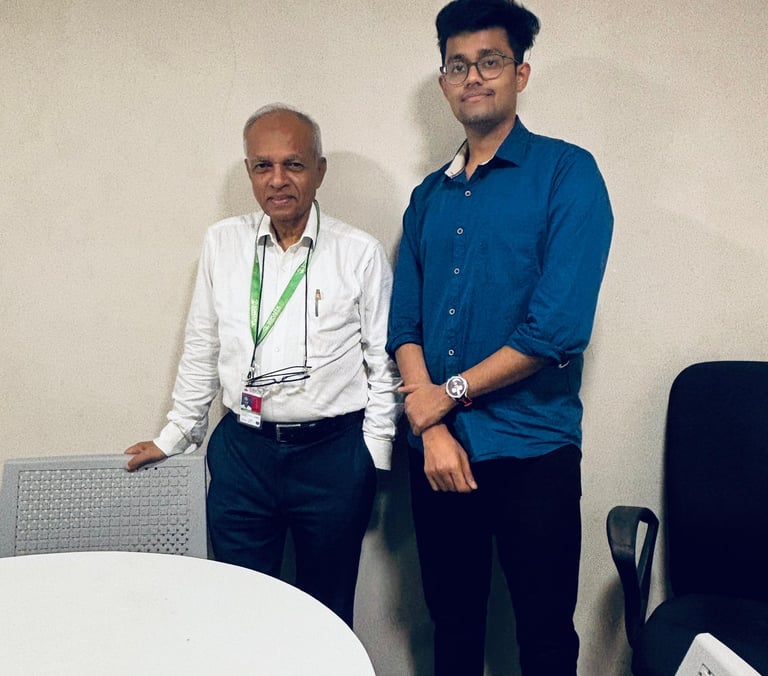
Some conversations don’t just give you insights — they shift the way you look at work, leadership, and the idea of building a career. My discussion with Mr. Swapan Kumar Ray, a man who has spent nearly four decades shaping India’s petrochemical ecosystem, was one such moment. As someone who has held leadership positions at Reliance, IPCL, and several influential industry bodies, his career is a reflection of India’s own evolving industrial landscape. Profile (22)
But beyond the milestones, what stood out were the principles, not the positions — the way he thinks, works, decides, leads, and teaches. This blog is an attempt to bring together the essence of that wisdom, not as a list of lessons, but as a narrative — a philosophy of working and living meaningfully in any profession.
The Conversation Begins: Clarity Before Complexity
When Mr. Ray speaks, the first thing you notice is his clarity. Not just clarity of speech, but clarity of thought. He believes that in any industry — whether petrochemicals, finance, or marketing — people rush too fast into execution. They chase results, campaigns, metrics, and deadlines, forgetting to first understand the foundation.
He told me, almost like a professor who has seen generations of professionals rise and fall:
“If your fundamentals are weak, no amount of strategy can save you.”
For him, fundamentals meant understanding the science behind polymers, the economics behind crude oil, the psychology behind consumer industries, and the global forces that influence local markets. But the deeper message was universal:
Curiosity builds competence, competence builds confidence.
Decision-Making in a Turbulent World
What fascinated me most was how he explained decision-making during his years at Reliance. The petrochemical sector is one of the most volatile spaces you can imagine — shaped by geopolitics, oil price shocks, currency movements, environmental pressure, and global demand cycles.
Yet he never saw volatility as chaos.
He saw it as a pattern.
He said:
“If you react to the market, you will forever remain behind it. But if you anticipate it, you will lead it.”
For him, every decision was a balance of data and direction. Numbers told him what was happening. Vision told him where things were going. This blend of analytical thinking and long-term intuition is something today’s young professionals rarely practice — but desperately need.
The Human Side of Corporate Success
While talking about mergers and acquisitions, he shared something striking. In the corporate world, we assume M&As succeed because the business case is strong, the synergy makes sense, or the financials are attractive. But in his experience, most mergers fail not in the boardroom, but in the hallways.
“Culture is where integration actually happens,” he said.
He described how two organizations may align on strategy and structure, yet collapse because teams can’t trust each other or adapt to one another’s ways of working.
It reminded me that corporate success isn’t built on spreadsheets — it’s built on emotions, empathy, and human ecosystems.
Branding in an Industry No One Talks About
One of the most refreshing parts of our conversation was his perspective on branding in heavy industries. In petrochemicals, the product never reaches the end consumer. The entire business is B2B, technical, engineering-heavy.
And yet, he believed branding mattered more here than anywhere else.
He said something I’ll never forget:
“People may not see your product, but they always see your reputation.”
He explained how branding at Reliance wasn’t about ads — it was about trust, reliability, consistency, and the narrative you build around your solutions. Even in the most complex industries, storytelling shapes perception. And perception shapes partnerships.
Sustainability: Not an Obligation, But an Opportunity
Given his deep involvement with the Indian Centre for Plastics in the Environment, I expected him to speak cautiously about sustainability. But instead, he spoke passionately. For him, sustainability isn’t a compliance requirement or a reputation management tool. It’s the next frontier of innovation. Profile (22)
He believes India must move from a linear model to a circular model — not by banning plastics, but by managing them better. He sees recycling, waste recovery, material innovation, and consumer education as the pillars that will define the industry’s credibility.
His confidence in India’s ability to build a sustainable plastics ecosystem wasn’t just optimistic — it was intentional.
Leadership as a Human Practice
When the topic shifted to leadership, I felt like I was listening to someone who has mentored thousands without even realizing it.
His philosophy is simple but profound:
Respect people, not positions.
Encourage disagreement.
Keep ego out of the room.
Build teams, not followings.
Stay curious even after 40 years.
He said, almost casually,
“When people feel seen and heard, they perform as if the company is theirs.”
It reminded me that leadership isn’t about control — it’s about creating space for others to grow.
Advice for Young Professionals: Slow Down, Learn Fast
Toward the end of our discussion, I asked him what today’s young professionals get wrong. His answer was immediate:
“You all rush too much.”
He explained how ambition is good, but restlessness is dangerous. Careers built too fast often collapse just as quickly. He urged young people to build skills, not labels; networks, not contacts; patience, not shortcuts.
And then he said the most important line of the entire conversation:
“Don’t chase titles. Chase competence. Titles will come running behind you.”
Looking Ahead: A Future India Will Shape
Mr. Ray sees the next decade of India’s petrochemical and polymer sector as a period of massive transformation — driven by innovation, sustainability, collaboration, and global ambition. In his eyes, India is no longer catching up.
India is preparing to lead.
Final Reflection: Values Outlast Everything
As we wrapped up, I asked him for one final message to students, marketers, and future leaders. He smiled and said:
“Industries will change. Technology will change. But your values — that is what will decide your career.”
And perhaps that is the real legacy of a leader like him.
Not the positions he held, not the committees he chaired, not the decades he spent in petrochemicals.
But the values he lived by, and how generously he shared them.